
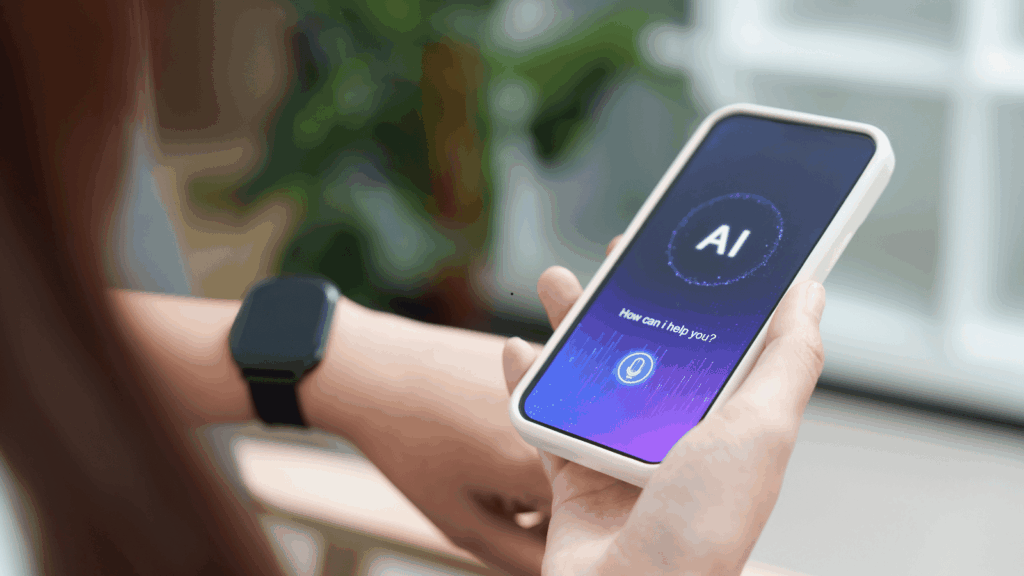

A job interview no longer always begins with a recruiter calling to introduce themselves. In an increasing number of hiring processes, the first interviewer candidates encounter is software.
Artificial intelligence can now present questions, record or transcribe answers, conduct voice conversations and help employers evaluate applicants. In a 2026 Greenhouse survey of 2,950 job seekers across five countries, 63% of respondents in the United States said they had already experienced an AI interview. However, many candidates reported that employers had not clearly explained how the technology was being used.
Understanding how an AI interview works can help you approach it with the same confidence and preparation you would bring to a traditional interview.
What Is an AI Interview?
An AI interview is a job interview in which artificial intelligence performs or supports tasks normally handled by a recruiter or hiring manager.
Depending on the platform, the AI may:
- Present interview questions.
- Conduct a voice or text conversation.
- Ask follow-up questions.
- Record and transcribe responses.
- Evaluate answers against job-related criteria.
- Generate scores, summaries or recommendations for recruiters.
An AI interview is therefore not one specific type of interview. It is a broad term covering several technologies used at different stages of recruitment.
It is also different from an ordinary virtual interview. A live interview conducted by a recruiter through Zoom, Google Meet or Microsoft Teams is simply an online interview. It becomes AI-assisted when software analyzes, summarizes or helps evaluate the conversation.
In most cases, the AI interview is an early screening stage rather than the final hiring decision. Applicants who perform well usually advance to interviews with recruiters or hiring managers.
Types of AI Interviews
Employers may use several AI interview formats.
One-Way Video Interviews
In a one-way video interview, questions appear on the screen and the candidate records an answer to each one. There is no live interviewer.
The candidate may receive a limited amount of preparation time before the recording begins. Some platforms also impose a maximum response time or restrict the number of attempts.
A recruiter may review the recordings manually. Alternatively, the employer may use an assessment system to evaluate the answers against competencies required for the role.
AI-Led Voice Interviews
An AI-led voice interview is designed to feel more like a telephone conversation. The system asks questions aloud, listens to the candidate’s responses and may ask relevant follow-up questions.
For example, if a candidate describes solving a workplace problem, the AI might ask what actions they personally took or what results they achieved.
Some systems compare each response with a predefined scoring rubric and provide recruiters with a score and explanation.
Text or Chatbot Interviews
Text-based interviews take place through a chatbot or messaging interface.
They are commonly used to confirm basic details such as qualifications, location, work authorization, availability and salary expectations. More advanced versions may ask behavioral or situational questions that require longer written answers.
AI-Assisted Human Interviews
AI does not replace the interviewer. A recruiter may conduct the conversation while software records notes, transcribes answers or identifies evidence related to the employer’s evaluation criteria.
The recruiter still controls the interview, while the AI reduces administrative work.
How Does an AI Interview Work?
The exact process varies, but most AI interviews follow several common steps.
First, the employer sends the candidate an invitation containing an interview link, instructions and a completion deadline. The invitation explains whether the interview will use video, voice, text or automated evaluation.
The platform may then ask the candidate to test their camera, microphone, speakers and internet connection. Some services provide practice questions before the official interview begins.
During the interview, questions are presented individually. In a recorded interview, the candidate answers while speaking to the camera. In a conversational interview, an AI agent may listen and respond in real time.
The system records or transcribes the answers. Where automated assessment is used, the responses may be compared with competencies selected for the position, such as communication, teamwork, problem-solving or customer service.
Recruiters can then receive the recording, transcript, score, summary or recommendation. Applicants who meet the required standard may proceed to a human interview, work sample or final assessment.
Not every recorded interview is automatically scored. Some employers use technology only to collect responses for recruiters to review.
What Does an AI Interview Evaluate?
An AI interview may evaluate different qualities depending on the job and the platform.
These can include:
- Relevant qualifications and experience.
- Communication skills.
- Problem-solving ability.
- Situational judgment.
- Teamwork and leadership.
- Customer-service skills.
- Technical knowledge.
- Language proficiency.
- Evidence provided in behavioral examples.
For example, an applicant for a customer-facing position may be asked how they would respond to an angry customer. The assessment could consider whether the answer demonstrates empathy, professionalism and an effective solution.
HireVue states that its assessments are designed around competencies connected to success in a particular role. It also says its video assessments consider the context of an answer rather than simply searching for isolated keywords.
Candidates should therefore focus on answering clearly and providing relevant evidence instead of attempting to insert as many job-description keywords as possible.
You should also avoid assuming that every platform analyzes facial expressions, eye movement or body language. Some systems do not use these signals. HireVue, for instance, states that it does not use interview recordings for facial recognition.
Why Are Employers Using AI Interviews?
The main attraction for employers is efficiency.
AI interviews allow organizations to screen more applicants without scheduling an individual recruiter call with every candidate. They can also enable candidates to complete initial interviews outside normal business hours.
Structured interviews may provide greater consistency because candidates applying for the same position receive similar questions and are assessed using the same criteria.
AI is already widely used throughout recruitment. SHRM reported that 51% of surveyed organizations used AI to support recruiting in 2025. Among HR professionals using AI for recruitment, 89% said it saved time or improved efficiency.
However, faster hiring does not automatically mean better hiring. Employers still need clear evaluation criteria, suitable technology and accountable human oversight.
Benefits and Concerns of AI Interviews
AI interviews can provide candidates with flexibility. A one-way interview may be completed without taking time off work or coordinating schedules across different time zones.
They can also create a more standardized first-stage process. Every applicant can receive the same core questions instead of facing completely different screening conversations.
However, the format raises legitimate concerns.
Candidates may not understand whether AI is merely recording the interview or actively evaluating it. One-way interviews also prevent applicants from asking questions and learning more about the employer.
Technical failures, poor internet connections and inaccessible platforms can affect performance. Automated systems may also disadvantage qualified candidates if they evaluate characteristics that are not genuinely necessary for the job.
Candidate trust remains a major issue. In Greenhouse’s 2026 survey, 70% of US candidates who had experienced AI evaluation said it was not clearly disclosed before their most recent AI interview. The report also found that candidates were more accepting of AI when its purpose was explained and humans remained involved in important decisions.
How to Prepare for an AI Interview
Start by reading the invitation carefully. Confirm whether the interview is recorded, conversational, text-based or scored automatically. Check the deadline, response limits, practice options and retake rules.
Study the job description and identify the skills the employer is most likely to assess. Prepare examples showing how you have used those skills in previous jobs, internships, volunteer work or education.
For behavioral questions, use the STAR method:
- Situation: Briefly explain the context.
- Task: Describe what you needed to accomplish.
- Action: Explain the steps you personally took.
- Result: State the outcome and what you learned.
Practise answering aloud. Recording yourself can help you identify answers that are too long, unclear or missing important details. Avoid memorizing a complete script because it may make your delivery sound unnatural.
Before the interview, test your microphone, camera and internet connection. Choose a quiet location with lighting in front of you rather than behind you. Close unnecessary applications, silence notifications and connect your device to power.
During the interview, speak at a steady pace and answer the question directly. Use specific examples, numbers and results whenever possible.
Most importantly, remain natural. Interview preparation guidance from HireVue recommends focusing on real experiences, the actions you took and the results you achieved rather than worrying excessively about camera eye contact.
Candidate Rights and Accommodations
Candidates may be entitled to information about how automated hiring technology is used, although the exact rules depend on their location.
Applicants with disabilities can request reasonable accommodations when an interview platform or assessment creates an accessibility barrier. US Department of Justice guidance states that employers must ensure hiring technologies do not unlawfully screen out qualified applicants with disabilities. Employers may need to provide an accessible version, additional time or an alternative assessment method.
Some jurisdictions have introduced more specific AI hiring rules. New York City requires covered automated employment decision tools to undergo a bias audit and requires employers to provide certain notices to candidates.
The European Union’s AI Act also identifies certain systems used to analyze applications and evaluate candidates as high-risk AI systems. These systems face requirements involving documentation, risk management, transparency and human oversight as the rules take effect.
Frequently Asked Questions
Is an AI interview a real interview?
Yes. Employers may use your answers to determine whether you advance to the next hiring stage. Treat it with the same professionalism as an interview with a recruiter.
Does AI decide whether I get the job?
AI may score or summarize your responses, but it does not necessarily make the final decision. In many hiring processes, recruiters review the results and selected candidates later meet human interviewers.
Can AI interviews detect cheating?
Some interview and assessment platforms may monitor activity such as switching browser tabs, using additional devices or receiving outside assistance. The exact monitoring depends on the platform and should be explained in the interview instructions.
Can I use AI to answer questions during an AI interview?
You can use AI beforehand to practise questions and improve your preparation. Using it secretly to generate real-time answers during the interview may violate the employer’s assessment rules and could lead to disqualification.
Does an AI interview look for keywords?
Some systems may recognize job-related language, but modern assessment tools can evaluate the meaning and context of an entire response. Forcing keywords into an irrelevant or unclear answer is unlikely to help.
What should I wear for an AI video interview?
Wear the same professional clothing you would choose for a live video interview. Your appearance should be suitable for the employer and position, even when no human interviewer is visible.
What happens if the interview platform fails?
Take screenshots or record the error, then contact the recruiter or the platform’s support team immediately. Do not repeatedly restart the assessment unless the instructions tell you to do so.
Can I request a human interview instead?
You can ask whether an alternative format is available. An employer may not be required to offer one simply because you prefer it, but candidates with disabilities may be entitled to a reasonable accommodation when the technology creates an accessibility barrier.